
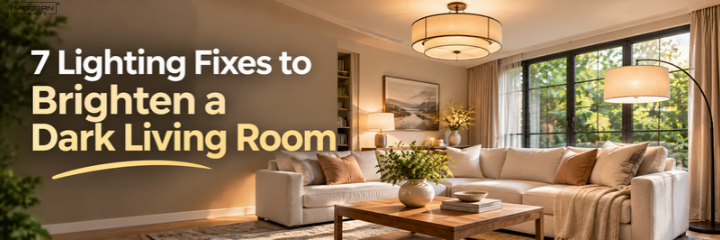
Living rooms can feel dark due to insufficient light sources, poorly positioned light fixtures, reliance on a single ceiling light, or the presence of dark surfaces that absorb light. The best way to make it brighter, while maximizing natural daylight, is to layer ceiling lights, floor lamps, table lamps, and wall sconces.
Your living room should be a welcoming, comfortable space that’s bright enough for everything from relaxing with family to reading a book or hosting friends. But when a room feels gloomy, even in the daytime, it can be hard to enjoy the space.
The good news is that you don't need to have bigger windows or an expensive renovation. A few well-placed lighting fixtures and some simple design tweaks can often make a huge difference.
Whether your living room is short on natural light, has dark furniture, or has an outdated ceiling fixture, these seven lighting fixes can help you brighten up your space and make it more inviting.
Why Does Your Living Room Feel So Dark?
Before you choose new lighting, it helps to understand what’s causing your living room to feel dim.
Several factors can contribute to poor lighting:
- Limited natural light: Small windows, shaded outdoor areas, or north-facing rooms can reduce the amount of daylight entering your living space.
- Poor lighting placement: A single ceiling fixture often leaves corners, walls, and seating areas in shadow.
- Dark interior finishes: Dark walls, floors, rugs, and furniture absorb more light and can make the room feel enclosed.
- Incorrect light bulbs: Bulbs with insufficient lumen output may not provide enough illumination for the room.
- Heavy window coverings: Thick curtains and bulky furniture can block valuable natural light.
- Missing lighting layers: Without a combination of ambient, task, and accent lighting, the room may feel unevenly illuminated.
Identifying the cause helps you choose the right solution rather than simply adding more bulbs.
7 Lighting Fixes to Brighten a Dark Living Room
1. Layer Your Lighting Instead of Relying on One Ceiling Light
One of the biggest mistakes with living room lighting is having only one overhead light. While ceiling lights provide overall illumination, they don't always spread light evenly throughout a room. The result can be dark corners, unbalanced brightness, and uncomfortable shadows.
The solution is layered lighting.
A well-designed living room typically combines three types of lighting:
- Ambient lighting: Provides overall illumination through ceiling fixtures, recessed lights, and other general lighting sources.
- Task lighting: Provides focused light for activities such as reading, working, or hobbies.
- Accent lighting: Highlights artwork, architectural details, shelves, and decorative features.
For example: a ceiling light in the center, a floor lamp beside the sofa, and a table lamp on a side table.
This arrangement casts light at different heights and gives the whole room a more even look. For ceiling fixtures, lamps, and decorative lighting options, check out the ModernLights Living Room Lighting Collection.
2. Add Floor Lamps to Dark Corners
Dark corners are one of the biggest reasons why a living room feels small and less inviting. A floor lamp can illuminate these neglected nooks without the need to run electrical work through the walls. It also adds another layer of light to play with your existing ceiling fixture.
Consider placing floor lamps:
- Beside sofas and armchairs.
- In corners between windows and furniture.
- Near reading areas.
- Behind sectional sofas.
- Beside decorative shelves or accent furniture.
Select a lamp that is bright enough for its intended purpose. Directional floor lamps are good for reading, and fixtures with diffused shades create softer ambient lighting.
ModernLights Product Recommendation:
The Novel 68-in Aluminum Floor Lamp is a useful option for adding controllable illumination to a living room. Its integrated LED produces 1,270 lumens at 3000K, with a 90 CRI rating and touch dimming.

- 1,270 lumens
- 3000K
- 90 CRI
- Touch dimming
$627.00$836.00Save 25%
Its adjustable brightness makes it practical for changing the atmosphere throughout the day.
You can also explore more designs in the ModernLights Floor Lamps Collection.
3. Choose the Right Ceiling Light Fixture
Your ceiling fixture is a key factor in how bright your living room looks. An old fixture, an undersized fixture, or a light that doesn’t produce enough light can make the entire room look dim. First, think about the height of your ceiling, the size of the room, and how it is currently lit.
Here are a few popular options:
- Flush mount lights: Sit close to the ceiling and work particularly well in rooms with lower ceilings.
- Semi-flush mount lights: Provide a little more visual presence while remaining suitable for many standard ceiling heights.
- Chandeliers: Can provide general illumination while creating an attractive focal point.
- LED ceiling lights: Offer integrated lighting solutions with a range of brightness and design options.
A good example is the Campton 2 Light 14in Black Flush Mount.

- 2 x E26 sockets
- Low-profile drum
- Black finish
$110.00
View ProductThis fixture features a low-profile drum design with two E26 bulb sockets, allowing you to select compatible bulbs based on your preferred brightness and color temperature.
For other styles and configurations, browse the ModernLights Ceiling Lights Collection.
Remember: a beautiful ceiling fixture should complement your other lighting sources rather than serve as the only source of illumination.
4. Use Wall Sconces to Eliminate Dark Spots
Wall sconces are an excellent way to add lighting where ceiling fixtures and floor lamps just don’t do the trick. They are mounted directly on walls, introducing light at eye level and contributing to the distribution of illumination on vertical surfaces.
They can also make a living room feel more thoughtfully designed.
Consider installing wall sconces:
- On either side of a fireplace.
- Beside artwork or decorative mirrors.
- Along large empty walls.
- Around seating areas.
- Near entryways connected to the living room.
Depending on the fixture design, wall sconces can provide upward, downward, or diffused illumination.
ModernLights Product Recommendation:
The Benji 2 Light Black Wall Sconce features a dual-arm design with two open cage-style light holders.
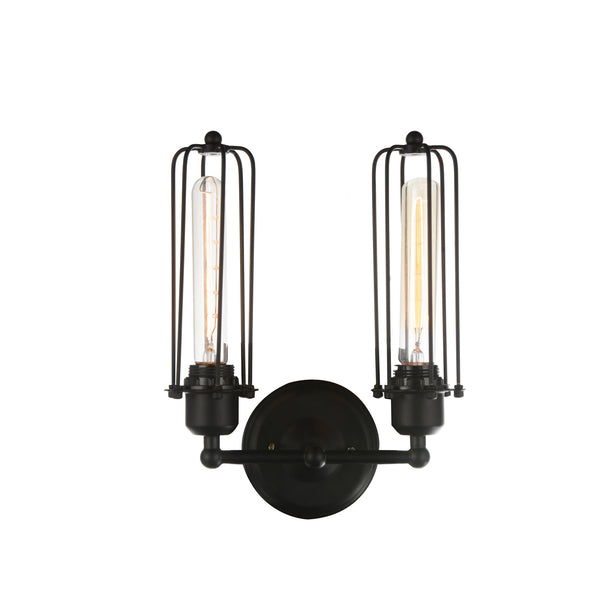
- 2 lights
- E26 base
- 10" W x 13" H
- Black finish
$43.95$55.44Save 21%
Its open construction allows light to spread freely, making it a decorative option for adding another lighting layer to living rooms and accent walls.
For additional styles, explore the ModernLights Wall Sconces Collection.
5. Choose Brighter Bulbs With the Right Color Temperature
Sometimes your living room doesn’t need more lighting fixtures. It just needs better light bulbs. Two important things to consider when choosing bulbs are lumens and color temperature.
Understand Lumens Instead of Watts
Lumens: how much visible light a bulb produces. Watts: how much electrical power a bulb consumes . Higher wattage doesn’t mean brighter, especially with traditional incandescent bulbs compared to modern LEDs.
As a general starting point, consider approximately 10 to 20 lumens per square foot for living room ambient lighting. The ideal amount depends on room layout, ceiling height, wall colors, daylight, and individual preferences.
For example, a 200-square-foot living room might start with approximately 2,000 to 4,000 lumens of combined ambient illumination. Additional task lighting can be added where needed.
Choose the Right Color Temperature
Color temperature is measured in Kelvin (K).
| Color Temperature | Appearance | Best Use |
|---|---|---|
| 2700K | Warm, soft white | Relaxing and cozy spaces |
| 3000K | Warm white | Everyday living room lighting |
| 4000K | Neutral white | Reading and focused activities |
| 5000K to 6000K | Cool white | Areas requiring a cooler appearance |
For most living rooms, 2700K to 3000K provides a comfortable atmosphere without making the space feel overly yellow.
You can also use dimmable bulbs or compatible fixtures to adjust brightness throughout the day.
Helpful tip: keep the color temperatures of nearby fixtures reasonably consistent. Mixing very warm and very cool lighting can make a room feel visually disconnected.
6. Use Mirrors and Reflective Surfaces to Maximize Light
Lighting is more than just the fixtures you put in. And also, the way the light moves in your living room. Mirrors and other reflective surfaces can help to disperse the daylight and artificial light that is available throughout the space.
A large mirror positioned opposite or adjacent to a window can reflect incoming daylight into darker areas.
You can also introduce reflective elements through:
- Glass coffee tables.
- Metallic decorative accessories.
- Glossy furniture finishes.
- Light-colored decorative surfaces.
- Polished metal lamp bases.
For the best results, position mirrors where they reflect an actual light source rather than an unlit wall.
This will not increase the amount of light your fixtures produce, but can help make the available light work harder.
7. Replace Heavy Curtains and Remove Lighting Obstacles
Sometimes the biggest lighting improvement doesn’t come from buying a new light fixture. Bulky furniture, thick curtains, and ornaments may block the entry of natural light in various parts of your living room.
Start by examining your windows and identifying anything that blocks daylight.
Here are a few simple improvements:
- Replace heavy curtains with sheer or lightweight alternatives.
- Keep window areas free from unnecessary furniture.
- Trim outdoor plants that block excessive daylight, where practical.
- Clean windows regularly to remove dust and dirt.
- Avoid placing tall furniture directly in front of windows.
- Choose lighter-colored curtains and decorative materials.
If you’re concerned about privacy, consider layered window treatments that allow you to control the light, but not block it out completely. Just making these changes and adding artificial lighting can make a huge difference, especially in rooms where there is not much natural light.
How to Choose the Best Lighting for a Dark Living Room
Choosing the right fixtures involves more than selecting attractive designs.
You should consider your room's size, ceiling height, furniture arrangement, and the activities that take place there.
Use the following checklist before purchasing new fixtures:
| What to Consider | What to Look For |
|---|---|
| Room size | Enough combined light output for the space |
| Ceiling height | Flush mounts for lower ceilings; appropriately sized hanging fixtures for taller ceilings |
| Lighting layers | A combination of ambient, task, and accent lighting |
| Bulb brightness | Check lumens rather than relying on wattage alone |
| Color temperature | Generally 2700K to 3000K for comfortable living spaces |
| Dimming | Compatible dimmers for greater brightness control |
| Fixture placement | Avoid leaving corners and seating areas in shadow |
The goal isn't to make every corner equally bright. It's to create a balanced environment where each area receives the light it needs.
Common Living Room Lighting Mistakes to Avoid
Even when you have attractive lighting fixtures, certain mistakes can prevent your living room from looking its best.
Here are some common issues to avoid:
Relying on one overhead fixture: A single ceiling light rarely provides balanced illumination throughout an entire living room.
Choosing bulbs that are too dim: Always check lumen output and make sure the bulbs are suitable for the fixture.
Ignoring dark corners: Unilluminated corners can make the entire space feel smaller.
Mixing incompatible color temperatures: Different lighting colors can create an inconsistent atmosphere.
Choosing fixtures based only on appearance: A beautiful fixture should also provide enough light for its intended purpose.
Forgetting about dimmers: Adjustable lighting makes it easier to transition between bright daytime activities and relaxed evenings.
Frequently Asked Questions
1. How Can I Brighten My Living Room Without Natural Light?
Use multiple artificial light sources at different heights. Combine ceiling fixtures with floor lamps, table lamps, and wall sconces. Choose suitable LED brightness levels and use lighter-colored surfaces to distribute available light more effectively.
2. What Type of Lighting Is Best for a Dark Living Room?
Layered lighting is generally the most effective solution. Start with an ambient ceiling fixture, add floor or table lamps for task lighting, and use wall sconces or accent lights to brighten darker areas.
3. How Many Lumens Do I Need for a Living Room?
A useful starting point is approximately 10 to 20 lumens per square foot for ambient lighting. A 200-square-foot room would therefore need roughly 2,000 to 4,000 lumens, distributed across suitable fixtures. You may need additional light for reading or other focused activities.
4. Are Warm or Cool Lights Better for Dark Living Rooms?
Warm white lighting between 2700K and 3000K is generally a comfortable choice for living rooms. Neutral white around 4000K can also work well for reading areas or other tasks requiring more focused visibility.
5. Where Should Floor Lamps Be Placed in a Living Room?
Place floor lamps beside sofas, armchairs, reading areas, and darker corners. Position them to provide useful illumination without shining directly into people's eyes.
6. Do Mirrors Really Make a Living Room Look Brighter?
Yes. Mirrors reflect existing natural and artificial light, helping distribute it around the room. Positioning a mirror near a window or opposite a light source can make a space feel brighter and more open.
Brighten Your Living Room With the Right Lighting
A dark living room doesn't necessarily need a major renovation. Often, the biggest improvements come from using the right combination of lighting fixtures, choosing suitable bulbs, and making better use of natural daylight.
Start by identifying areas where light is missing. Add a floor lamp to a dark corner, introduce wall sconces to create more balanced illumination, or update an outdated ceiling fixture.
Most importantly, think about how different light sources work together.
Explore the ModernLights Living Room Lighting Collection to find ceiling fixtures, floor lamps, table lamps, and wall sconces that can help transform your living space into a brighter and more comfortable place to spend time.
Shop Living Room Lighting
Share:
How to Choose the Right Ceiling Fan for Fall and Year-Round Comfort