
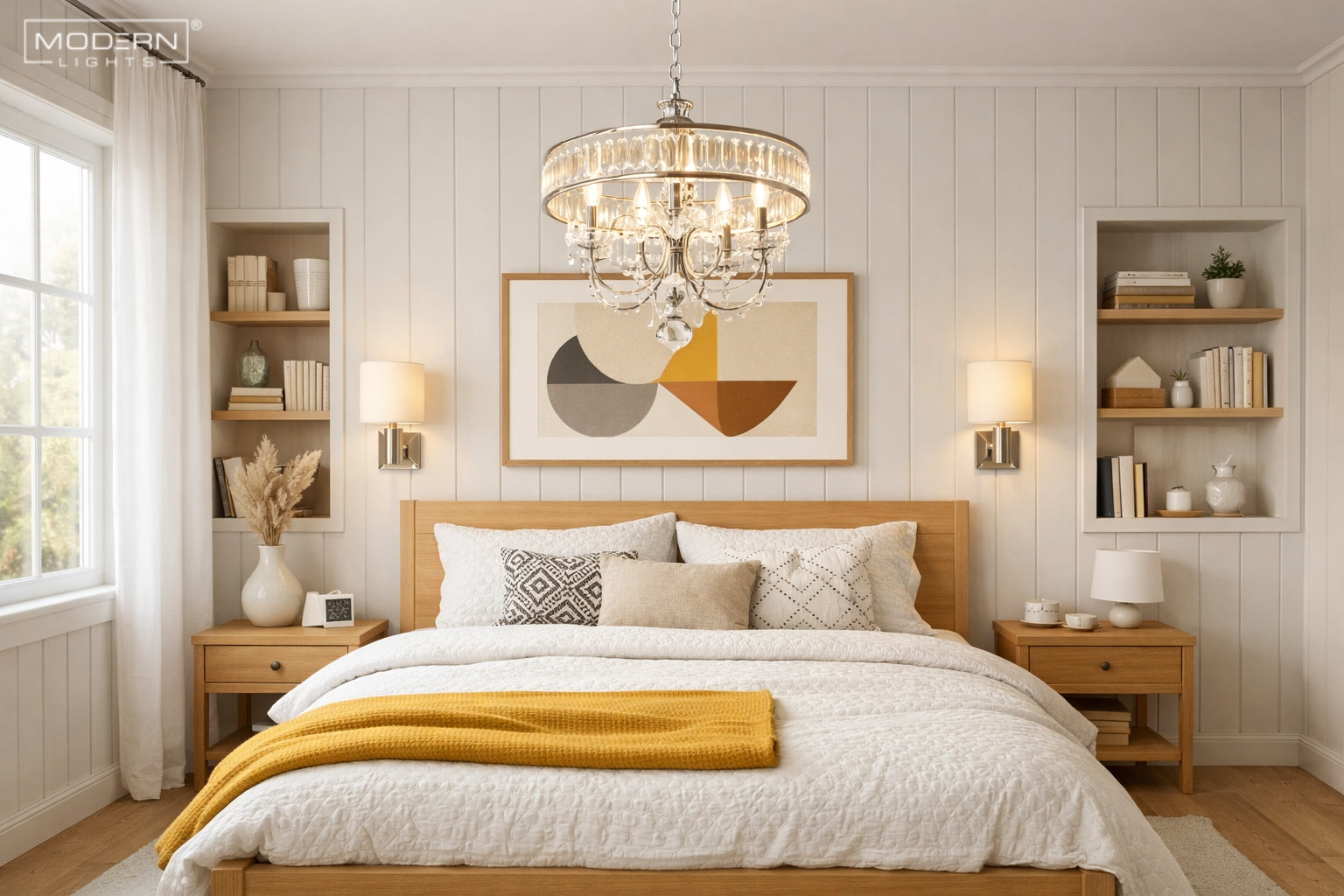
Why Lighting Matters in a Modern Bedroom
In a quiet way, lighting changes how a bedroom feels at night. During the day, the furniture and colors stand out, but at night, the lighting is what makes the area unique. A bedroom with good lighting can feel calm, welcoming, and restful. On the other hand, a room with bad lighting can feel uncomfortable, even if it was carefully planned. The goal is not only sight, but also atmosphere. Light that is soft and even can help your body relax and get ready for sleep. Modern bedroom design isn't just about straight lines and few decorations; it's also about making a place that feels good all the time. Smart lighting choices add warmth, depth, and comfort to a space without making it too bright.
Use Layered Lighting for a Cozy Atmosphere
Most beds have one overhead light that isn't strong enough, which is where most problems happen. It does make the room brighter, but it doesn't make it feel good.
Putting the lighting together in stages is a better way to do it. It's like getting information from more than one source instead of just one. It looks much better with a mix of modern bedroom lighting, soft light by the bed, and some subtle accent lighting.
The room feels more natural when these parts are put together. When you need to, you can keep it bright. In the evening, you can dim it down. That adaptability is what turns a simple set-up into comfortable lighting for a bedroom that feels right.
Best Types of Lighting Fixtures for Bedrooms
There isn’t one “perfect” fixture for a bedroom. What works well is a combination of different lighting types, each doing its own job.
A good setup usually includes a main light source, something near the bed, and a softer layer to balance things out. Mixing different bedroom lighting elements helps the space feel more complete instead of flat.
The idea isn’t to fill the room with lights—it’s to place them where they actually make a difference.
Pendant Lights and Linear Suspension for a Modern Look

If you want something more design-forward than a table lamp, hanging fixtures can make a big impact in a bedroom. Bedroom pendant lighting works especially well on either side of the bed, where it keeps the nightstand clear and adds a clean, balanced look.
For larger bedrooms, linear suspension lighting can also be a strong option. It works best in spaces that have more width or a defined layout, such as a bed with a bench at the foot or a seating area within the room. The long, structured shape gives the room a more polished and modern feel without looking heavy.
The key is placement. These fixtures should feel intentional, not oversized. When used properly, they add both function and style in a way that feels refined.
Ceiling Lights and Chandeliers

The main ceiling light is usually the first thing people choose, and it does set the tone for the rest of the room. In larger bedrooms, chandeliers can add a bit of presence without feeling too heavy. In smaller spaces, simpler options like flush mount lights/ semi-flush mount lights tend to work better and keep things clean.
What matters most is scale. If the fixture feels too big or too small, the whole room can feel off. A balanced choice blends in naturally without drawing too much attention.
Bedside Lighting Options

This is where the room really starts to feel comfortable. Lighting near the bed should feel soft and easy—not something that’s too bright or harsh. Options like bedside lamps are always reliable, while wall sconces for bedroom setups are great if you want to save space.
Some people also prefer hanging lights instead of lamps. It gives a cleaner look and keeps the surface free. Either way, the goal is simple: make the space feel calm, especially at night.
Floor Lamps and Accent Lighting

Without softer lighting, a bedroom can feel a bit flat. Adding a floor lamp in a corner or using a small accent light can change that quickly. These aren’t meant to light up the whole room—they just add a gentle glow that makes the space feel more relaxed.
It’s a small detail, but it makes a noticeable difference. The room starts to feel more layered, less sharp, and a lot more comfortable.
Choosing the Right Color Temperature for Comfort
Brightness matters, but the tone of the light matters even more. For bedrooms, warmer lighting almost always works better. It feels softer and easier on the eyes, especially in the evening. Most people choose between 2700K and 3000K, and while they’re close, they do feel different.
2700K lighting has a warmer, softer glow that works well for cozy bedroom lighting. It creates a relaxed feel that’s ideal for winding down.
3000K lighting is slightly brighter and a bit more neutral. It still feels warm, but gives a cleaner look—something that pairs nicely with modern lighting fixtures.
It really comes down to preference. One leans more toward comfort, the other toward clarity.
Modern Bedroom Lighting Ideas for Small Rooms
In smaller bedrooms, lighting needs to be practical. Oversized fixtures or too many lights can make the space feel tighter than it is. Wall-mounted options like wall lights or wall sconces for bedroom setups are a smart choice because they don’t take up surface space. For the ceiling, compact flush mount lights help keep things simple and open.
The goal here isn’t to add more—it’s to use less, but in a better way. A few well-placed lights will always feel better than one overpowering fixture.
Lighting Ideas for Large Bedrooms
Larger bedrooms give you more freedom, but they also need more balance. One light source won’t be enough, so it helps to spread things out. A mix of modern bedroom lighting fixtures—like a central light, bedside options, and some softer lighting—keeps the space from feeling empty.
You can go a bit bolder here, but everything still needs to work together. If the lighting feels disconnected, the room will too.
How to Create a Cozy Bedroom with Lighting
A cozy bedroom doesn’t come from adding more lights—it comes from using the right ones in the right places. Start with a main fixture, then build around it. Add softer light near the bed using bedside lamps, or go for wall sconces if you want something cleaner. If you prefer a more modern look, bedroom pendant lighting works well too.
Keep the lighting warm, avoid anything too harsh, and focus on how the room feels at night. That’s where the real difference shows.
FAQ’s
What is the best lighting for a cozy bedroom?
Use a mix of ambient, task, and accent lighting. Soft bedside lights with a gentle overhead glow create a warm, relaxing atmosphere.
What color light is best for bedrooms?
Warm light is best. It feels softer, more relaxing, and helps create a cozy environment.
Are LED lights good for bedroom lighting?
Yes, LEDs are energy-efficient, long-lasting, and offer adjustable brightness and color for comfort and style.
How bright should bedroom lighting be?
Keep it soft to moderate. Use dimmable lights to adjust brightness based on your needs.
Can you use pendant lights in a bedroom?
Yes, pendant lights work well, especially beside the bed. They save space and add a modern touch.
Are wall sconces good for bedrooms?
Yes, they provide soft lighting, save space, and are great for reading or relaxing.
How do I make my bedroom lighting look modern?
Use simple designs, neutral tones, and layered lighting for a clean, modern look.
Conclusion
Lighting has the power to completely change how a bedroom feels. A well-designed setup doesn’t rely on one fixture but instead combines different sources to create balance. From the main ceiling light to bedside and accent lighting, each element plays a role in shaping the atmosphere. Warm tones, thoughtful placement, and layered lighting all contribute to a space that feels comfortable and inviting. Modern design isn’t just about appearance—it’s about how the room functions and feels over time. With the right lighting choices, even a simple bedroom can become a place that feels calm and welcoming every day.
Share:
Lighting Mistakes Homeowners Should Avoid
Dining Room Lighting Guide: Chandeliers, Pendants & Ceiling Lights