
Most people don’t think much about dining room lighting until they actually sit down and something feels off. The table looks great. The chairs are fine. The space is clean. But the light either feels too sharp, too dull, or just not in the right place. And once you notice it, it’s hard to ignore. That’s because dining lighting sits right in front of you—literally above the table. So if it’s not right, the whole room feels slightly uncomfortable.
The good part is, fixing it isn’t complicated. You just need to choose the right type of light for your space.
Why Dining Room Lighting Matters More Than You Think
Lighting in a dining room isn’t just there to help you see your food. It actually shapes the entire mood of the space. If it’s too bright, it can feel a bit harsh—almost like you’re sitting under a spotlight. Too dim, and it starts to feel impractical. What you’re really aiming for is something in between. You want the table to be clearly visible, but you also want the room to feel relaxed. That balance is what makes a space feel comfortable without you even realizing why.
Chandeliers: The Classic Dining Room Choice
A chandelier is usually the first thing people think about for a dining room, and honestly, it still works really well. There’s something about having a single fixture centered above the table that just makes the room feel complete. It naturally draws attention without trying too hard. That said, modern chandeliers aren’t what they used to be. A lot of them are simpler now—clean lines, minimal shapes, nothing overly decorative. They still act as a focal point, just in a quieter way. Where people usually go wrong is in size. Too small, and it feels like it’s just hanging there without purpose. Too big, and suddenly it’s the only thing you notice.
Pendant Lights: A Modern Alternative
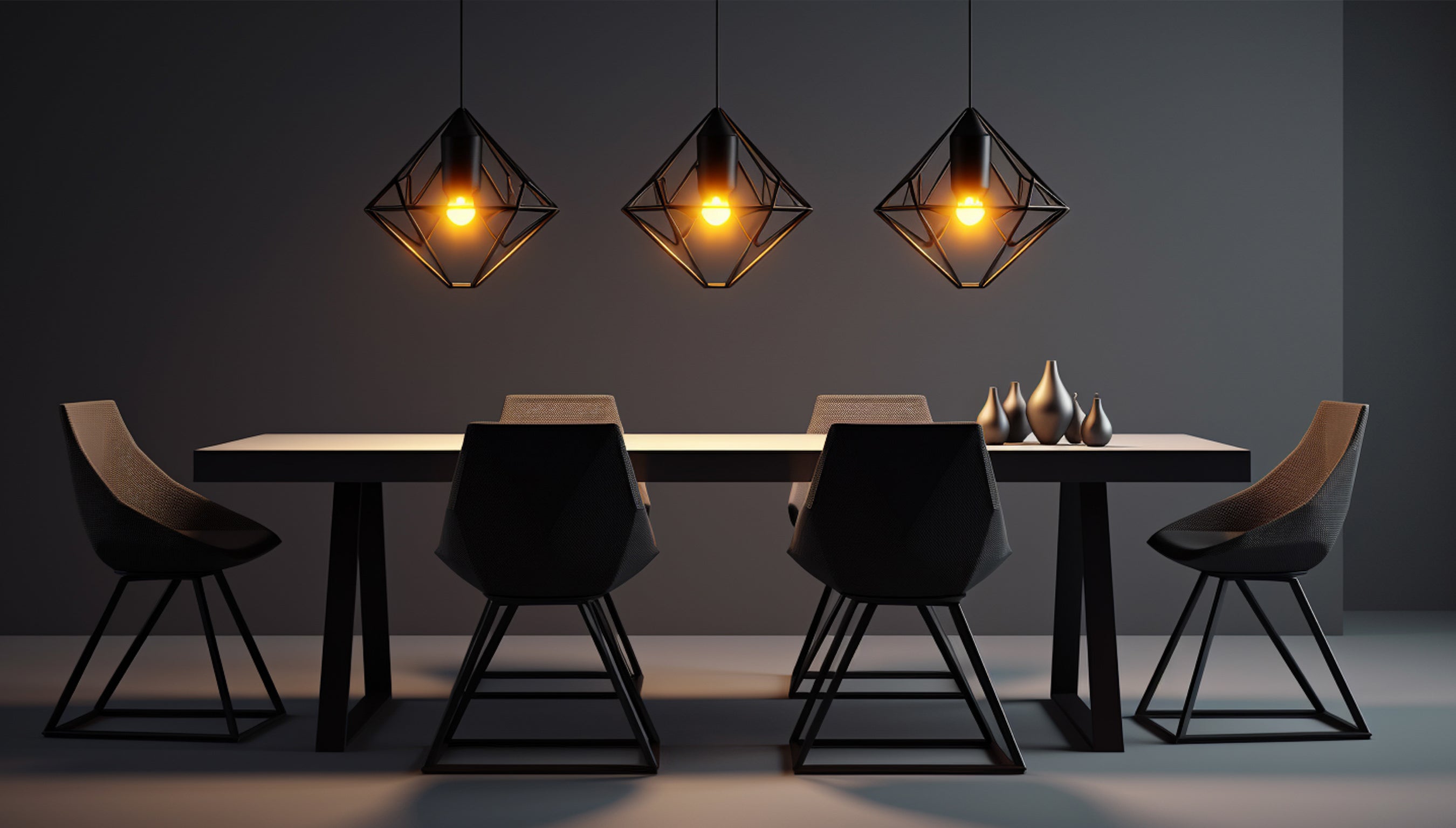
If chandeliers feel a bit too traditional, pendant lights are usually the next option people consider. They’re simpler, more flexible, and easier to work into modern spaces. You can go with one larger pendant or break it into two or three smaller ones, depending on your table. The nice thing about pendants is that they don’t feel as heavy visually. They still give you focused light, but in a more relaxed way.
When to Use Pendant Lighting
Pendant lighting works well in more modern interiors where simplicity matters. It also helps when you want lighting that feels less decorative and more intentional. It’s a good choice if you’re trying to keep the room clean without adding too much visual weight.
Linear Suspension Lights for Rectangular Tables
For longer dining tables, especially rectangular ones, linear fixtures are often the better option. A linear suspension light spreads light evenly across the entire table instead of focusing on just one spot. This makes it more practical for larger surfaces and creates a cleaner visual line above the table. These fixtures work particularly well in modern dining rooms where symmetry and balance are important. Instead of breaking the light into multiple points, they keep everything consistent.
Ceiling Lights for Simpler Dining Spaces
Not every dining room needs a hanging fixture. In some spaces—especially those with lower ceilings—a ceiling light can be the better choice. It keeps the room open while still providing enough brightness.
Flush vs Semi-Flush Mount Options
Flush and semi-flush mounts are useful when:
-
The ceiling height is limited
-
The space is smaller
-
You want a cleaner look
They don’t hang down much, which makes them practical without sacrificing design. In modern interiors, these fixtures often come in minimal styles that still add character without taking over the space.
How to Choose Based on Table Shape and Room Size
The shape of your table should guide your lighting choice.
-
Round tables → single fixture (chandelier or pendant)
-
Rectangular tables → linear or multiple pendants
-
Large rooms → larger or layered lighting
-
Small rooms → compact or flush-mounted lighting
When the fixture matches the table, everything feels more balanced.
Lighting Placement and Hanging Height Guide
Placement is just as important as the fixture itself.
Most dining lights should hang:
-
Low enough to focus on the table
-
But high enough to avoid blocking views
If the fixture is too high, it loses impact. If it’s too low, it becomes distracting.
The goal is to keep the light centered and proportional to the table below it.
Warm vs Cool Lighting for Dining Rooms
Dining spaces almost always benefit from warmer lighting. Warm tones create a more relaxed and inviting atmosphere, which fits the purpose of the room. Cooler lighting can feel too sharp and is better suited for workspaces. If your dining room feels uncomfortable at night, the light tone is often the reason.
Common Dining Room Lighting Mistakes
Some issues come up again and again:
-
Choosing a fixture that’s too small
-
Hanging lights too high
-
Relying on a single harsh light
-
Ignoring table shape when selecting fixtures
These mistakes are easy to overlook but can affect the entire room.
Bringing the Right Lighting Together
There isn’t one perfect choice for every dining room. It depends on the space, the table, and how you use it. Some rooms work best with a chandelier, others with pendant lighting, and some with simpler ceiling fixtures. The important part is making sure the light feels connected to the table and the room as a whole.
FAQ’s
What type of light is best for a dining room?
It depends on the table and room size. Chandeliers work well for central focal points, while pendant or linear lighting is better for longer tables.
Can I use multiple pendant lights over a dining table?
Yes, multiple pendants are commonly used for rectangular tables. They help distribute light evenly and create a more balanced look.
Are ceiling lights good for dining rooms?
Yes, especially in spaces with lower ceilings. Flush or semi-flush ceiling lights keep the room open while still providing enough light.
How low should a dining light hang?
It should hang low enough to focus on the table but high enough to keep sightlines clear across it.
What color light is best for dining rooms?
Warm lighting is usually best because it creates a more comfortable and inviting atmosphere.
Conclusion
Dining room lighting is less about the fixture itself and more about how it fits the space. The right choice depends on your table, your ceiling height, and the overall layout of the room. Whether you go with a chandelier, pendant lights, or a simpler ceiling fixture, the goal is the same—create a space that feels balanced, comfortable, and easy to use.
Once that’s in place, the room naturally starts to feel complete.
Share:
Modern Bedroom Lighting Ideas for a Cozy Space
How to install Ceiling Fans? Ceiling Fans Installation Guide