
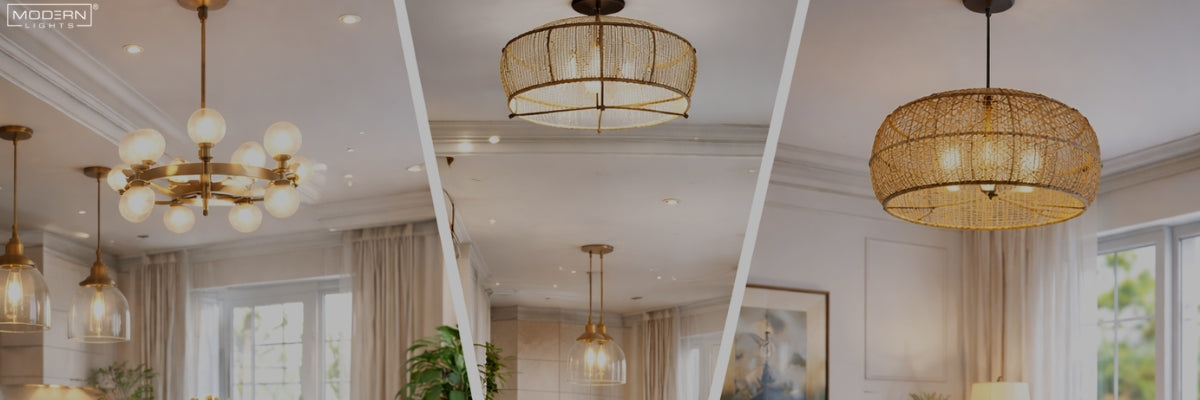
Lighting fixtures are quite important for both how a room works and how it looks. A well-chosen modern light fixture can bring out the beauty of a room's architecture, give it comfortable light, and be the main focus of the room. But if you pick the wrong size, a room can rapidly feel off balance. A chandelier that is too small may not look important and may not give enough light, while a fixture that is too big can make the whole room feel overly busy.
When choosing the proper size light fixture, you need to think about the room's size, the height of the ceiling, and how the furniture is arranged. Designers often use simple guidelines for spacing and sizing to make sure that the lighting looks right. This tutorial shows you how to pick the right size light fixture for living rooms, dining rooms, bedrooms, and other rooms so that your lighting makes your home seem better and work better.
Why Light Fixture Size Matters in Interior Design
Light fixtures do more than just light up a room. They also change how a room looks. When a fixture is the right size, it fits in with the other furnishings and architectural features in the room and spreads light evenly around the space.
A fixture that is too small generally doesn't fit in with the rest of the design and disappears. On the other hand, a fixture that is excessively big might take over the room and make it hard to see other things, such as furniture or paintings. Interior designers want the lighting to feel right for the room so that it looks comfortable and put together.
Lighting is commonly used as a decorative focal point in modern dwellings. Chandeliers, pendant lights, and ceiling fixtures that seem like sculptures are often the main focus of living rooms and dining rooms. Picking the right size fixture makes sure that the lighting adds to the room instead of throwing off the balance of the design.
The Basic Formula for Choosing Light Fixture Size
Interior designers often use a simple calculation to figure out how big a chandelier or ceiling light should be. This method lets homeowners rapidly figure out how big of a fixture will look well in a room.
Here's how the rule works:
Room length + room width (in feet) = light fixture diameter (in inches)
For instance, if a room is 12 feet by 14 feet, the total is 26. A light fixture that is around 26 inches wide would usually fit well in this space.
This rule is especially useful for ceiling lights that hang from the middle of the room, like chandeliers or decorative ceiling lights. Even while it's not a hard and fast rule, it might help you choose the right lighting. Once you have the approximate circumference, you may narrow down your options by taking into account things like the height of the ceiling and where the furniture will go.
Choosing the Right Fixture Size for Living Rooms
The living room is frequently the main place where people meet in a home, so the lighting should be even and comfortable. These rooms usually have more floor space, so they can fit bigger lights that both light up the room and make it seem better.
Most of the time, a chandelier or decorative ceiling light looks best in the middle of the seating area. The fixture should look right with the size of the furniture arrangement, not the whole room.
In bigger living areas, statement lighting may make a strong focal point. Modern homes often use big chandeliers or geometric ceiling lights to visually anchor the space.
Ceiling height is also an important factor to think about when picking a light for the living room. Higher ceilings can hold bigger fixtures, while lower ceilings generally need flush or semi-flush installations that keep the headroom comfortable.
How to Choose the Right Chandelier Size for Your Room?
Choosing Fixture Size for Dining Rooms
Because the light fixture is usually right above the table, you need to think about the lighting in the dining room in a specific way. The idea is to make the lighting even so that it showcases the table while still being comfortable.
It is typical to say that the light fixture should be between half and two-thirds the width of the dining table. This makes sure that the fixture stays visually attached to the table and doesn't look too big.
|
Table Width |
Fixture Size |
|
36 inches |
18-24 inches |
|
48 inches |
24-32 inches |
|
60 inches |
30-40 inches |
In addition to diameter, the hanging height also matters. Most dining fixtures should hang approximately 30 to 36 inches above the table surface. This height provides sufficient illumination while maintaining clear sightlines across the table.
Choosing Light Fixture Size for Bedrooms
The lighting in your bedroom should be quiet and balanced, but it should still be bright enough for regular tasks. A lot of bedrooms have a central ceiling light with bedside lamps or wall lights.
The size of the main ceiling light should be in line with the size of the room and the bed. In smaller bedrooms, flush-mount fixtures or compact ceiling lights are usually the best choice. Chandeliers or beautiful pendant lights can lend a more dramatic touch to larger bedrooms.
The lighting in a bedroom should never be too much. A nice place to relax is made by soft, even lighting. Choosing a fixture that fits the room's size makes sure the lighting helps create a calm atmosphere while also being a nice design element.
Ceiling Height and Fixture Size
When choosing the right size and design of a light fixture, the height of the ceiling is an important thing to think about. Flush or semi-flush mount fixtures usually perform best in rooms with normal eight-foot ceilings. These designs let in enough light without lowering the ceiling height.
If your ceilings are between nine and ten feet high, you can use somewhat larger fixtures or small chandeliers to make the space look more ornamental while still keeping the distance between them reasonable.
Larger hanging fixtures are frequently better for rooms with ceilings that are more than 10 feet high. Chandeliers and other types of suspended lighting may fill vertical space and make a beautiful focal point.
The height and diameter of a fixture can both grow as the ceiling height grows. This helps keep the right scale and makes sure the lighting stays balanced in the room.
How Pendant Light Size Works
People often use pendant lights in kitchens, dining rooms, and entryways. Instead of just one light, pendant lighting usually has several lights spaced out evenly across a surface, like a kitchen island.
The width of the island or countertop should be the same as the size of each pendant. Larger islands can hold larger pendants or a row of smaller lights.
The space between the pendants is also significant. Most designers say that there should be between 24 and 30 inches between each pendant light. This spacing makes the illumination feel equally spread out without looking too full.
The height of pendant lighting should also be comfortable. Pendants in kitchen islands commonly dangle 30 to 36 inches above the countertop. This gives focused light while keeping the view clear.
Common Lighting Size Mistakes to Avoid
A lot of homeowners pick lighting based only on how it looks, without thinking about size and proportion. This frequently means that the fixtures don't fit the room well.
People often make the mistake of picking a chandelier that is too small for a big room. This makes the fixture look small and limits how much light it gives off. Another common mistake is not taking the height of the ceiling into account when picking hanging lights. This can lead to lights that dangle too low.
Pendant lights also often have problems with spacing. If you put pendants too close together, the light can feel crowded. If you space them too far apart, there can be black spots.
Thinking carefully about the size of the room, where the furniture goes, and the height of the ceiling will help avoid these problems and make sure the lighting looks even.
How Lighting Size Impacts Modern Home Design
Lighting is becoming a big part of modern interior design. A lot of modern homes use lighting fixtures as sculptures that make a room's architecture look better. People commonly utilise big statement chandeliers in open living spaces to make a focal point. People often put sleek pendant lights over kitchen islands to add both design flair and task illumination. Minimalist ceiling lights may make bedrooms and corridors look more elegant without being too flashy.
The size of the fixture plays an important role in how well it complements the surrounding design. When the proportions are right, the lighting fits in with the room naturally while yet being a design aspect that stands out.
Choosing the proper size fixture makes sure that the lighting is more than just a functional feature of the room; it also fits in with the decor of the room.
FAQ’s
What size chandelier should I use for my room?
A simple rule is to add the room’s length and width in feet to determine the approximate chandelier diameter in inches. For example, a 12-foot by 14-foot room would work well with a chandelier around 26 inches wide. This formula provides a good starting point for choosing a fixture that looks balanced within the room.
How big should a dining room light fixture be?
Dining room fixtures typically measure between half and two-thirds the width of the dining table. This proportion helps the lighting feel connected to the table without overpowering it. The fixture should also hang about 30 to 36 inches above the table surface.
Can a light fixture be too large for a room?
Yes. An oversized light fixture can dominate the room and create an unbalanced appearance. While statement lighting can be dramatic, it should remain proportional to the room size and furniture arrangement.
How far should pendant lights hang?
Pendant lights above kitchen islands or counters usually hang about 30 to 36 inches above the surface. This height provides effective task lighting while maintaining comfortable visibility across the space.
Conclusion
To make sure that the lighting in any space is balanced and looks good, you need to choose the right size light fixture. A fixture that is the right size improves both the function and the look of the room, whereas one that is the wrong size might throw off the room's proportions.
Homeowners may confidently choose lighting that goes well with their interiors by following simple rules like the room measuring formula, taking into account the height of the ceiling, and making sure the size of the fixture matches the location of the furniture.
Choosing the right size chandelier for the living room, pendant lights for the kitchen, or a statement fixture for the dining room makes the lighting fit in with the rest of the room's decor. Lighting not only brightens up a room, but it can also improve the mood of the whole house when it is in the appropriate proportions.
Share:
5000K vs 6000K Backlit Address Numbers : Which is Better?
2700K vs 6000K Backlit Address Numbers : Which is Better?