
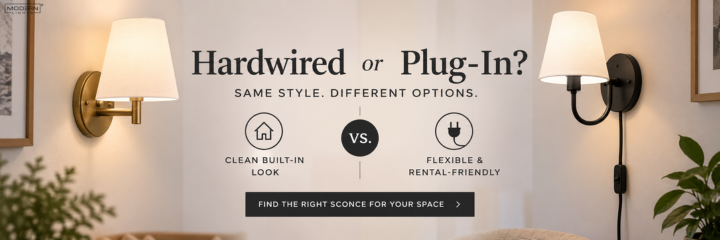
Wall sconces are one of the easiest ways to add both functional and decorative lighting to a room. Before you choose a fixture, you’ve got one big decision to make: hardwired or plug-in?
Hardwired wall sconces connect directly to the electrical wiring in your house. Plug-in wall sconces are plugged into a standard electrical outlet with a power cord. Hardwired Sconces: These give a clean, built-in look and are perfect for permanent installations. Plug-in sconces are more versatile, easier to install, and useful for renters or a room that doesn’t have an electrical box already in place.
Hardwired vs. Plug-In: At a Glance
| Feature | Hardwired Wall Sconce | Plug-In Wall Sconce |
|---|---|---|
| Installation | Requires electrical wiring | Plugs into an outlet |
| Professional installer | Often recommended | Usually not required |
| Visible cord | No | Yes |
| Flexibility | Lower | Higher |
| Permanent installation | Yes | No |
| Rental-friendly | Usually no | Yes |
| Appearance | Clean and integrated | More casual / flexible |
| Relocation | More difficult | Easy |
| Electrical work required | Usually yes | Minimal |
| Best for | Permanent homes and remodels | Rentals and flexible layouts |
What Is a Hardwired Wall Sconce?
A hardwired wall sconce is hardwired into your wall’s electrical wiring. The fixture is wired to a junction box and controlled by a wall switch, dimmer, or compatible controls. The wiring is hidden, so you don’t see a single cord.
Hardwired sconces tend to be found in bedrooms, bathrooms, hallways, living rooms, dining rooms, entryways, and stairways. They are particularly popular during renovations where walls are already open for electrical work.
Advantages
- No exposed cords — clean, built-in look
- Wall switch or dimmer compatible
- Permanent, integrated installation
- Polished finish for custom interiors
- Ideal when electrical work is underway
Disadvantages
- Requires an electrical box and wiring
- May need a licensed electrician
- Higher total installation cost
- Difficult to relocate once installed
- Not practical for renters
Shop Hardwired Wall Sconces at Modern Lights
Permanent, cord-free, and polished. Hardwired by a licensed electrician for a built-in finish. Free shipping on orders over $99.
Browse all hardwired wall sconces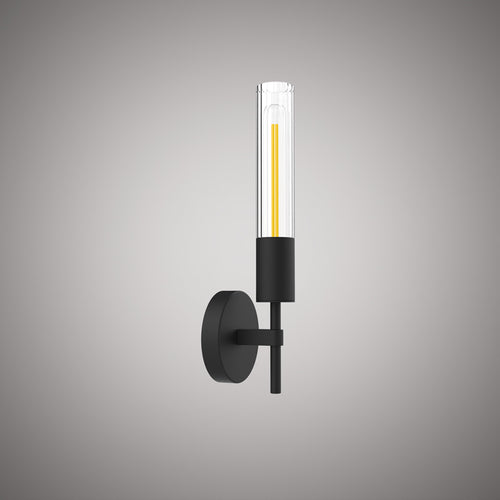
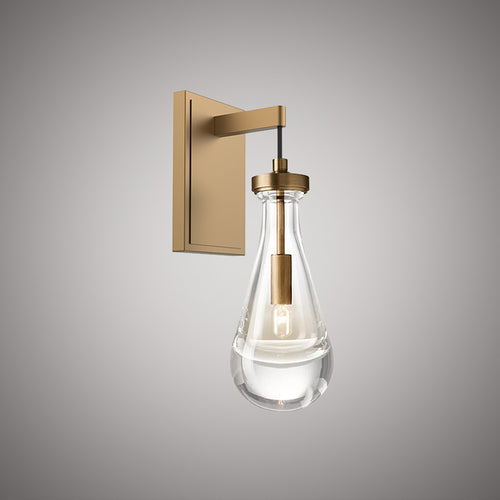


What Is a Plug-In Wall Sconce?
A plug-in wall sconce is powered by a cord plugged into a standard electrical outlet. Simply plug in and install the fixture—no wiring in walls needed. Many plug-in sconces come with decorative cords or cord-management clips, so the cord looks intentional rather than an afterthought.
Plug-in sconces are perfect for renters, places with no electrical box, or when you want the flexibility to move the fixture later.
Advantages
- No electrician needed — mount and plug in
- Renter-friendly, no permanent changes
- Easy to reposition when you rearrange
- Lower total installation cost
- Simple to replace or update
Disadvantages
- Visible power cord along the wall
- Placement limited by outlet location
- Cord may need concealment accessories
- Usually no built-in wall-switch control
Shop Plug-In Wall Sconces at Modern Lights
No electrician needed. Mount it, plug it in. Renter-friendly and easy to reposition.
Browse all plug-in wall sconces


6 Key Differences: Hardwired vs. Plug-In
Installation
A hardwired sconce requires an electrical connection in the wall behind. New wiring may be required for installation if no box is present. Most rooms find plug-in sconces much easier to install, as they connect to an existing outlet.
Appearance
The cleaner look is hardwired sconces. No cord leads to an outlet, which is especially appealing in minimalist and luxury interiors. Stylish plug-in sconces can be installed thoughtfully with decorative cords or cord covers.
Cost
Both types have similar prices for fixtures. Installation is the difference. Hardwired installations can include electrical wiring, junction box installation, wall repair, switch installation, and labor from a professional. Plug-in sconces require very little of that.
If you are already renovating and electrical work is already in progress, adding hardwired sconces at the same time makes financial sense. Otherwise, plug-in is typically the more economical choice.
Flexibility
Plug-in sconces are quick to remove, reposition, or take to a new home. Hardwired sconces are for those places where you need permanent lighting.
Control Options
Hardwired wall sconces with wall switches & dimmers. Plug-in sconces come with in-line switches, pull chains, or touch controls, or can be used with smart plugs. If you’re into centralized wall-switch control for your room, hardwired is the way to go.
Best Use Cases
Choose Hardwired For
- Permanent home installations
- New construction or major renovations
- Bathroom vanity lighting
- Hallways and stairways
- High-end interior designs
- Locations requiring concealed wiring
Choose Plug-In For
- Rental properties and apartments
- Temporary or seasonal lighting
- Bedrooms without existing wiring
- Flexible furniture layouts
- DIY-friendly installations
- Spaces avoiding electrical work
Are Plug-In Sconces Better for Renters?
Yes, most of the time. Permanent electrical changes are generally not an option for renters. A plug-in sconce offers wall lighting without the need for a new hardwired connection.
If you’re renting and want to hang lights, here are some tips: Go for a lightweight fixture, place it near an existing outlet, use cord-management accessories to keep things neat, and always check your lease agreement before making any changes to the walls.
Plug-in sconces are especially useful beside beds, sofas, desks, and reading chairs. Shop all wall sconces at Modern Lights—many ship free in 24 hours.
Converting Between Types
Plug-In to Hardwired
This is possible in some instances, but don’t assume every plug-in fixture is convertible. The fixture must be rated for hardwired use, and installation must follow local electrical codes. Before making any wiring changes, consult a qualified electrician.
Hardwired to Plug-In
Depending on the construction of the fixture and the manufacturer’s specifications, some hardwired fixtures can be adapted for plug-in use. Never add a plug to a hardwired fixture without checking it is suitable. Always do as the manufacturer tells you.
Bedrooms and Bathrooms
Bedrooms
Hardwired sconces are ideal for permanent bedside lighting—no visible cords and wall switch or dimmer control. If you want to rearrange the room, plug-in sconces are a great option for easier installation. For rental use, plug-in is normally the practical choice.
Bathrooms
Electrical safety is key in bathrooms. Around vanities and mirrors, hardwired sconces are the standard. The fixture needs to be rated for its location and installed according to applicable electrical codes. Call a licensed electrician when electrical work is needed. Modern Lights stocks fixtures for both damp and dry locations—check the product spec before you buy.
How to Choose the Right Wall Sconce
Beyond the hardwired vs. plug-in decision, consider these factors:
- Purpose: Ambient, accent, task, or reading light? A bedside reading sconce has different requirements than a hallway accent.
- Location: Is there an existing outlet or junction box nearby?
- Room style: Match the finish and silhouette — modern, traditional, industrial, farmhouse, or mid-century.
- Light direction: Upward-facing shades create soft ambient light. Downward-facing focuses illumination. Adjustable arms are best for task lighting.
- Bulb type: Check the fixture's requirements. LED bulbs offer energy efficiency and variety in color temperature.
- Dimming: Look for fixtures marked "dimmable" and pair with a TRIAC or ELV compatible dimmer for LED fixtures.
Read more: Best Wall Sconces Under $100 or visit our Installation Guide.
Final Verdict: Which Should You Choose?
Neither is universally better. The right choice depends on your home, installation setup, budget, and how permanent you want the fixture to be.
Choose Hardwired If You Want
- A permanent, integrated installation
- Concealed wiring with no visible cord
- Wall-switch or dimmer control
- A polished, built-in appearance
- Long-term value in a home you own
Choose Plug-In If You Want
- Simple, no-electrician installation
- Renter-friendly, no permanent changes
- Easy relocation when you rearrange
- Lower total installation cost
- Flexibility in a space that evolves
Frequently Asked Questions
Hardwired wall sconces connect directly to the home's electrical wiring. Plug-in wall sconces receive power through a cord connected to a standard electrical outlet. Hardwired fixtures are permanent and cord-free; plug-in fixtures are portable and require a nearby outlet.
Yes, when the fixture is properly rated, installed according to manufacturer instructions, and connected to a suitable outlet. Never overload a circuit. Look for cETLus or UL-certified fixtures such as those in the Modern Lights catalog.
Not necessarily. The control method depends on the fixture and electrical setup. Hardwired sconces can be connected to wall switches, dimmers, smart switches, or fixture-mounted controls.
Yes. A plug-in wall sconce connects to an existing outlet — no junction box or new wiring required. It is one of the most accessible lighting upgrades available for DIY installation.
Yes — plug-in sconces are one of the best lighting options for renters. They provide wall-mounted lighting without permanent electrical modifications, and can be removed cleanly when you move out.
Plug-in wall sconces are considerably easier. You mount the fixture and plug it in. Hardwired sconces require an electrical connection inside the wall, which may need a licensed electrician if no box is already in place.
Hardwired sconces provide a cleaner, more integrated look because there is no visible cord. Many plug-in sconces feature decorative fabric cords or cord-management options and look equally stylish when installed thoughtfully.
The fixture price is not necessarily higher. However, total installation cost can be significantly more when electrical wiring, junction boxes, wall repairs, switch installation, and professional labor are required.
Share:
Top Ceiling Fans Under $200 for Modern Homes
4 Measurements to Take Before Buying Lighting or a Ceiling Fan