
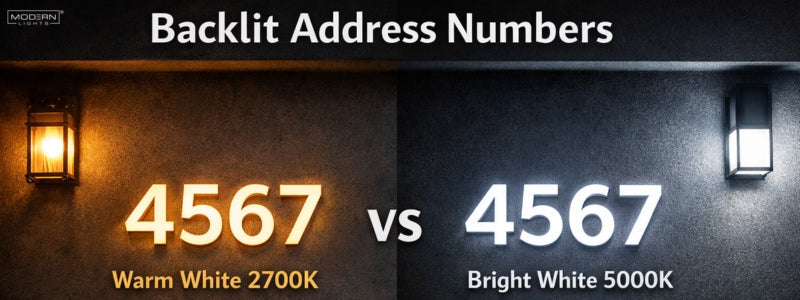
Many homeowners don't know how vital it is to choose the proper color of light for backlit address numbers. The visibility of the numbers at night, how well they match the façade of your house, and how simple it is for guests or delivery drivers to find your address are all influenced by the color temperature of the light.
Backlighting is frequently used in modern LED address numbers to produce a halo glow behind each digit. Because it combines appearance and functionality, this lighting style is popular in modern homes. Nevertheless, the final appearance is significantly altered by the color temperature of the LED light.
Warm white 2700K and cool white 5000K are two of the most popular choices. Depending on the architecture, exterior colors, and distance from the street of the house, each produces a distinct visual effect and has special benefits.
Understanding the difference between these two lighting temps lets homeowners choose the one that best meets their style and visibility demands.
Understanding Color Temperature in LED Lighting
The appearance of light produced by a bulb or LED fixture is referred to as color temperature. It describes whether the light seems chilly and bluish or warm and yellowish and is measured in Kelvin (K).
Higher Kelvin values result in colder, brighter light, whereas lower Kelvin values provide warmer tones. The majority of external lighting fixtures in homes are between 2700K and 5000K.
Similar to conventional incandescent bulbs, warm lighting at 2700K produces a gentle and welcoming glow. Because it seems cozy and friendly, this kind of light is frequently employed in living areas and outdoor ornamental lighting.
Cooler illumination about 5000K is similar to daylight. In dim settings, it appears bright and clear, enhancing contrast and visibility. Color temperature has an impact on how easily illuminated address numbers can be spotted from the street and how the halo glow extends across the wall.
Why Lighting Color Matters for Backlit Address Numbers
The lighting color used in backlit address numbers affects various elements beyond mere brightness. Visibility is one of the most crucial factors. The numbers may be more difficult to read at night if the lighting temperature does not produce enough contrast against the wall.
The entire outside appearance of a house is also influenced by color temperature. While cooler lighting might make the house appear crisper and more contemporary, warm lighting frequently provides a welcome atmosphere.
Curb appeal is another factor. Backlit numbers are often placed close to the garage wall or front door, where they blend in with the outside style of the house.
Lastly, readability is really important. Clearly visible home numbers are essential for emergency personnel, delivery drivers, and guests. The numbers will stay identifiable from the street without looking unduly bright or distracting if the proper color temperature is chosen.
What Is 2700K Lighting? (Warm White)
The warm white tone produced by lighting at 2700K is similar to the radiance of conventional incandescent lamps. Because it produces a gentle and welcoming atmosphere, this color temperature is frequently utilized in home settings.
2700K lighting creates a soft halo effect behind backlit address numbers. The delicate glow created by the light's dispThe warm white tone produced by lighting at 2700K is similar to the radiance of conventional incandescent lamps. Because it produces a gentle and welcoming atmosphere, this color temperature is frequently utilized in home settings. 2700K lighting creates a soft halo effect for 2700K backlit house numbers, allowing the numerals to remain visible while maintaining a warm and subtle glow. The delicate glow created by the light's dispersion across the wall surface draws attention to the numerals without overpowering the surrounding architecture.
Natural elements like stone, brick, and wood go nicely with warm lighting. These materials improve the external design by reflecting warm light. Due to its seamless integration with porch lights, walkway lighting, and other outdoor fixtures, 2700K lighting is preferred by many homeowners.
Version across the wall surface draws attention to the numerals without overpowering the surrounding architecture.
Natural elements like stone, brick, and wood go nicely with warm lighting. These materials improve the external design by reflecting warm light.
Due to its seamless integration with porch lights, walkway lighting, and other outdoor fixtures, 2700K lighting is preferred by many homeowners.
Advantages of 2700K for Backlit Address Numbers
The capacity of 2700K lighting to produce a warm and refined appearance is one of its key benefits. This color temperature gives a beautiful aspect to the home's entrance with its warm warmth.
Warm light produces a delicate, elegant halo effect that goes well with contemporary architecture. The lighting improves the overall design without overpowering the exterior because it disperses softly across the wall surface.
Additionally, warm lighting lessens glare and produces a cozy nighttime ambiance.
Disadvantages of 2700K Lighting
Warm lighting may not always provide the best visibility from a distance, despite its aesthetic advantages. For homes further from the street, the numerals may be a little less obvious due to the weaker brightness.
Warm colors like tan or beige on the outside wall are another drawback. In these circumstances, contrast may be diminished when the illumination blends in with the wall.
Cooler lighting may work better for homeowners who prioritize maximum visibility at night.
What Is 5000K Lighting? (Cool White / Daylight)
Lighting around 5000K produces a cool white tone akin to natural daylight. This color temperature is perfect for circumstances when vision and clarity are crucial, since it seems bright and sharp. When used in 5000K backlit house numbers, this lighting creates a stronger halo effect that improves readability and helps the address stand out clearly at night. Compared to warmer tones, 5000K lighting produces a stronger halo effect when employed in backlit address numbers. It is easier to read the numbers from a distance because they are clearly delineated.
Advantages of 5000K for Backlit Address Numbers
Improved vision is one of the main benefits of 5000K lighting. The address is easy to read because of the brilliant white tone, which increases contrast between the digits and the wall surface.
Clarity is an additional advantage. Drivers and guests can readily recognize the numerals thanks to the sharper outlines provided by cool white lighting.
In areas that are darker and may have less street lighting, this illumination temperature also functions well.
Disadvantages of 5000K Lighting
In certain household settings, cooler lighting may seem too bright even when it enhances visibility. The pure white tone might sometimes feel more functional than attractive.
5000K illumination could be more noticeable than anticipated in areas where the majority of outdoor lighting is warm.
Warm lighting might be more appropriate for homeowners that want a more subdued and evocative exterior lighting design.
2700K vs 5000K: Side-by-Side Comparison
|
Feature |
2700K Warm White |
5000K Cool White |
|
Light Colour |
Warm yellow glow |
Bright daylight white |
|
Apperance |
Soft and inviting |
Crisp and modern |
|
Visibility |
Moderate |
High |
|
Best for |
Decorative curb appeal |
Maximum visibility |
|
Atmosphere |
Cozy residential feel |
Bright contemporary look |
Which Color Temperature Is Best for Backlit Address Numbers?
The layout of the house and the requirements for visibility determine the ideal lighting hue for backlit address numbers. Warm lighting is generally advantageous for homes near the street since the gentle halo glow improves curb appeal and allows for enough visibility. Cooler lighting may be necessary for improved reading on properties with lengthy driveways or little street lighting. Another factor is the color of the exterior walls. While light surfaces may soften the glow, dark surfaces enhance contrast.
Choosing the proper lighting temperature ensures the address remains both visible and visually appealing.
How Wall Color Affects Backlit Address Number Lighting
The color of the wall has a big impact on how backlit numbers look at night. The halo glow is more strongly highlighted by the stark contrast created by dark walls. Light-colored walls create a softer lighting impression by more evenly dispersing the glow. Brick and stone are examples of textured materials that can scatter light and provide intriguing visual patterns surrounding the numbers. Selecting a lighting hue that complements the wall surface ensures the numerals stay both beautiful and easy to see.
Best Placement for Backlit Address Numbers
To maximize visibility, placement is crucial. Installing address numbers in areas that face the street and are not blocked by landscaping is recommended. The wall next to the front door, the garage facade, or a pillar by the driveway are typical places for installations. The height at which numbers are displayed should make it simple for drivers to identify them. The address can be seen from a distance if it is placed correctly and the lighting is at the proper temperature.
Conclusion
When choosing a lighting color for backlit address numbers, visibility and outside design must be balanced. Both 2700K and 5000K lighting offer advantages depending on the home’s style and location. Warm lighting at 2700K creates a gentle halo glow that complements external lighting in homes and improves curb appeal. Stronger brightness and greater contrast are produced by cool illumination at 5000K, which facilitates reading the numbers from a distance. Homeowners can choose a lighting temperature that maintains their address fashionable and visible at night by taking into account elements like wall color, positioning, and distance from the street.
Share:
9 Creative Ways to Display Your House Numbers
5000K vs 6000K Backlit Address Numbers : Which is Better?