
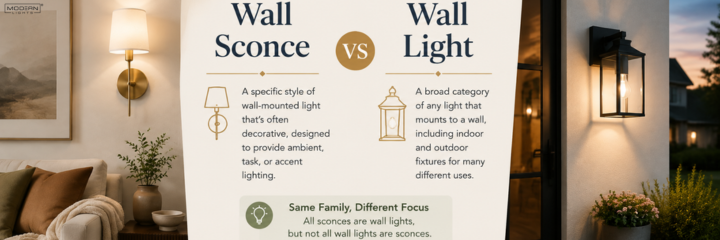
Quick answer: A wall sconce is a type of wall light, but not all wall lights are called sconces. Wall light is the catch-all term for anything attached to a vertical surface. Sconce describes a specific mounting style and shape within that category. The difference is more a matter of terminology, design, and use than any hard-and-fast rule, and different retailers and manufacturers use the words slightly differently..
If you shop for lighting enough, you'll see "wall sconce" and "wall light" used on the same product, sometimes in the same sentence. That's not lazy copywriting. It shows how the two terms really work together, one broad and one specific, and once you get that relationship, picking the right fixture for your wall gets a lot easier.
What Is a Wall Sconce?
A wall sconce is a light fixture that mounts directly to the wall and places its light source close to the wall surface, usually behind a shade, glass panel, or decorative backplate rather than exposed. That close-up, shielded profile is what distinguishes a sconce from other wall fixtures.
It is a design detail as much as a functional one.
The direction of light from sconces, pointing up or down or both, affects the tone of a room more than the wattage does. An upscenic glow softly on the ceiling and reads as ambient. A lower sconce provides ambient light in reading nooks or hallway wayfinding.
More often than not, you'll see sconces as a decor element in their own right. Sconces on either side of a mirror, fireplace, or art piece serve double duty by providing light and wall symmetry. That decorative role is a big part of the reason sconces are talked about as a style unto themselves and not just another wall light.
What Is a Wall Light?
"Wall light" is the generic term. Any device that attaches to a wall and emits light, whether it's a decorative sconce, a simple porch fixture, a bathroom vanity bar, or a motion-triggered security light, is included under this heading. The term indicates the location of the fixture. It doesn't tell you what it looks like or its shape.
The category is so broad that wall lights neatly fall into indoor and outdoor groups. Indoor wall lights are not subjected to the elements, so they can have fabric shades, open bulbs, and delicate finishes. Outdoor wall lights must have sealed housing, gaskets, and a real IP rating, as rain and temperature variations will expose any weak point in the construction within a season.
Wall lights do more work than sconces as well. A wall light can be functional, such as a motion-sensor fixture above a garage door, or decorative, such as a picture light over a painting. Sconces are one style that falls under this category, not a separate category running alongside it.
Wall Sconces vs Wall Lights: What's the Difference?
| Feature | Wall Sconces | Wall Lights |
|---|---|---|
| Meaning | A specific type of wall-mounted fixture | Broad category of wall-mounted lighting |
| Design | Often decorative or architectural | Ranges from simple to highly decorative |
| Use | Ambient, task, and accent lighting | Ambient, task, accent, and security lighting |
| Location | Primarily indoors, though outdoor sconces exist | Indoor and outdoor |
| Style | Often a prominent decor element | Very wide range of styles |
Are Wall Sconces and Wall Lights the Same Thing?
Not really, but it's easy to understand why people confuse them. Think of a sconce as a kind of wall light, like a pickup truck is a kind of vehicle. Each sconce is a wall-mounted light. A wall light is not always a sconce.
Some of the confusion comes from how retailers and manufacturers label their own products. One brand might categorize a candle-arm fixture under "sconces," while another might categorize the same style under "wall lights," with no separate sconce category at all. There is no one industry body enforcing one definition, so the labeling on any given site is really just a reflection of how that company organizes its own catalog.
That means the safest way to shop is to search broadly first. If you aren't sure, start with wall lights and narrow down once you see the shape or style you actually want.
Common Types of Wall Sconces
Sconces are classified mostly based on the light direction and mounting mechanism. These are the styles you'll see most often.
Upward-Facing Sconces
They shoot the light at the ceiling, which bounces it back down as a gentle indirect glow. They read more as ambient than task lighting and work well in rooms where you want a gentle background light rather than a bright center of attention, such as a living room or a formal dining space.
Downward-Facing Sconces
Downward sconces cast light down to the floor or a specific surface below, making them a good option for hallways, stairways, and anywhere you want light to pool at eye level or lower for wayfinding rather than washing out the entire ceiling.
Up-and-Down Sconces
These bring both directions together in one fitting, lighting above and below the mounting point at the same time. Layering is a popular way to fill a wall with light in a contemporary interior without the need for a second fixture to be nearby.
Swing-Arm Sconces
Swing-arm sconces feature a hinged arm that allows the light source to be repositioned after installation. These are often chosen for bedside or reading chair use where you want the option of pulling the light closer without having to get up and move a lamp.
Picture Lights
A narrow, directional sconce designed to be mounted above a piece of art or display shelf and cast an even band of light across it. Picture lights are about coverage and glare control, not ambient room lighting, as they are only there to show what is on the wall.
Common Types of Wall Lights
Because "wall light" covers so much ground, the category includes styles that have nothing to do with the sconce shape at all:
- Bathroom wall lights: mounted beside or above a mirror for even, shadow-free grooming light.
- Outdoor wall lights: weatherproof fixtures for porches, patios, and exterior walls.
- Security wall lights: motion-activated fixtures built for visibility and deterrence rather than decor.
- Vanity lights: horizontal bar-style fixtures, usually grouped in twos or threes above a sink.
- Picture lights: directional fixtures for illuminating art (also counted among sconce styles above).
- Reading lights: compact, often adjustable fixtures mounted beside a bed or chair.
- Decorative wall lights: statement pieces chosen as much for looks as for output.
- Motion-sensor wall lights: automatic fixtures for entries, garages, and walkways.
Where Are Wall Sconces Best Used?
Sconces earn their keep in rooms where soft, shielded light and a bit of visual symmetry both matter:
- Bedrooms, flanking the headboard in place of nightstand lamps
- Living rooms, framing a fireplace or a piece of furniture
- Hallways, spaced evenly to guide movement without overhead glare
- Dining rooms, layered with a chandelier or pendant for depth
- Entryways, as the first light guests see when they walk in
- Bathrooms, on either side of a mirror for even face lighting
- Stairways, marking each landing or turn for safety and style
Where Are Wall Lights Best Used?
The broader wall light category covers spaces where function usually comes first:
- Exterior walls, for general nighttime visibility
- Porches and entryways, welcoming guests and lighting house numbers
- Garages, over doors and along driveways
- Patios, for evening use without a full overhead fixture
- Bathrooms, especially vanity-style bars over a mirror
- Utility areas, like laundry rooms and basement stairwells
- Hallways and corridors, indoors or in shared building spaces
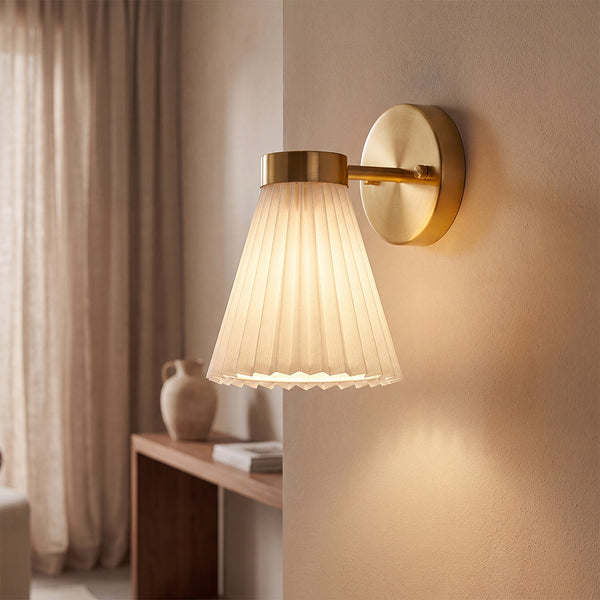
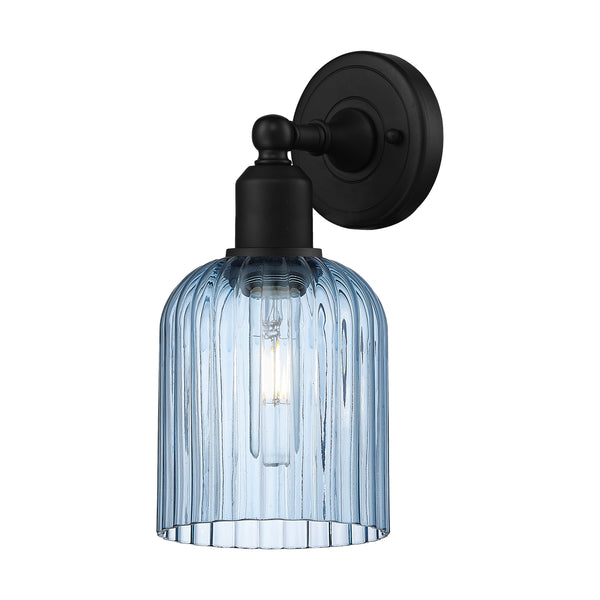
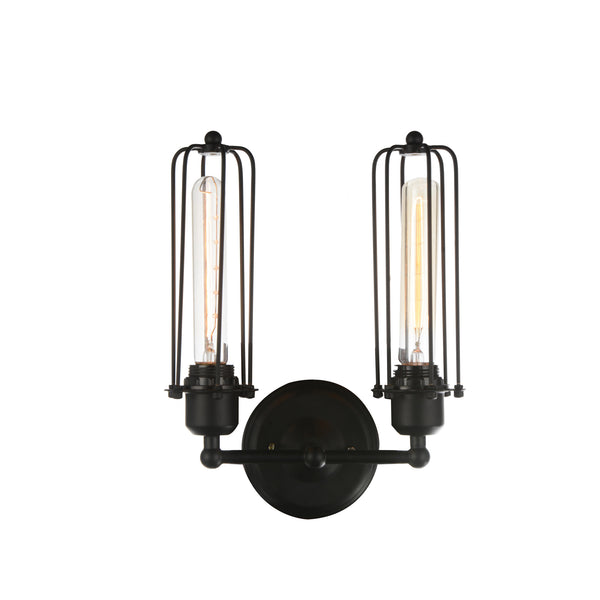
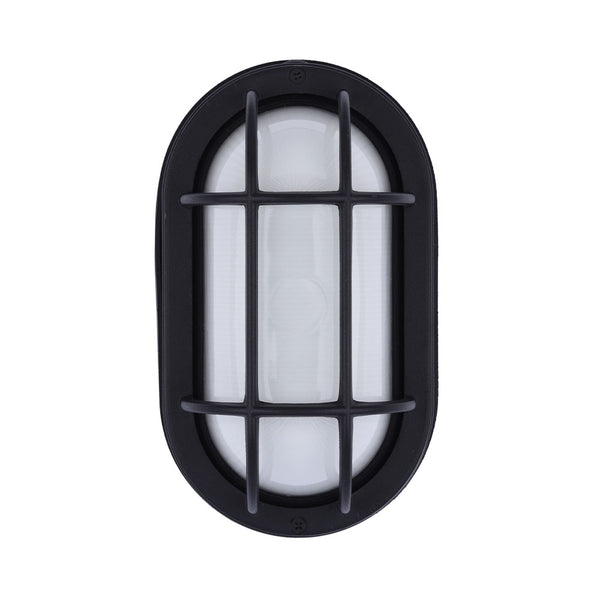
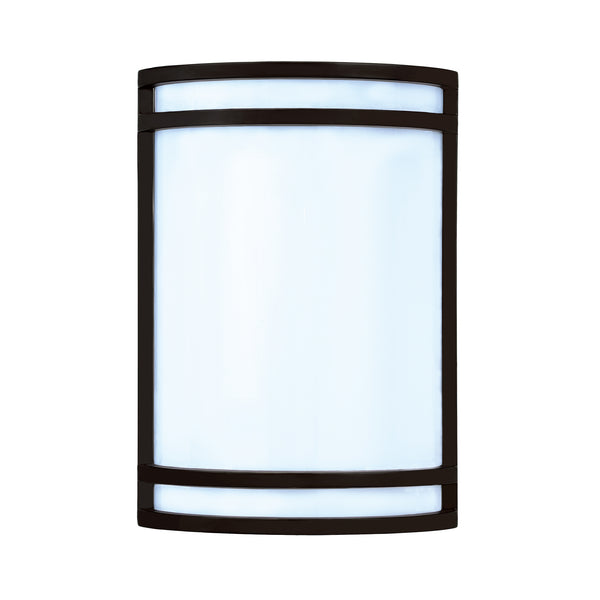
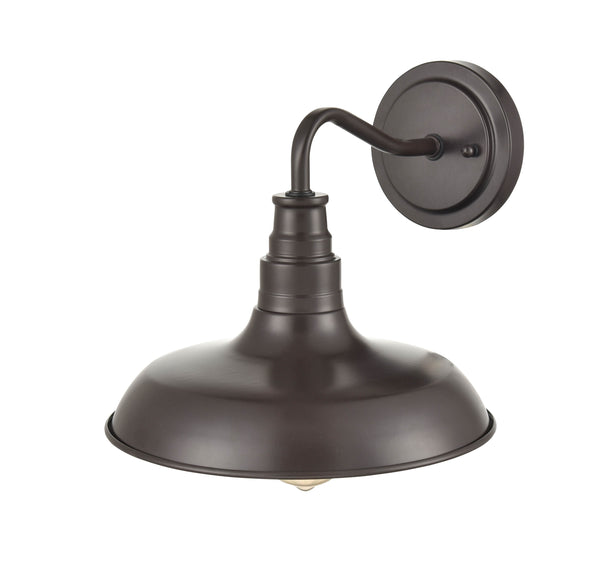
Three indoor sconces built as decor pieces, and three outdoor wall lights built to handle weather, straight from the Modern Lights catalog.
Looking for more budget-friendly picks? See Best Wall Sconces Under $100: 6 Top Picks.
How to Choose Between a Wall Sconce and a Wall Light
Consider the Lighting Purpose
Before shopping by style, figure out what job the fixture needs to do. Ambient light is spread throughout a room and works well with sconces that go up or up and down. Task light is a must-have to be concentrated on one spot, leading you to a swing-arm sconce or a downlight. Accent light is for highlighting one object, and that is what picture lights are built for. Security lights are usually more concerned with coverage and motion detection than decor, so you're more likely to find a general wall light than a sconce.
Consider the Location
The first fork in the road is indoor and outdoor. Beyond that, look at the wet location rating if the fixture will be exposed to direct rain or spray, vs a damp rating for covered porches and bathrooms, vs a dry rating for fully indoor rooms. #1 reason why an exterior light fails early is that it is a dry-rated fixture but is installed outdoors.
Consider Your Interior Style
Traditional reads a candle-arm sconce. Transitional drum shade sconce with metal backplate. A bare-bulb or geometric cage sconce appears industrial. A clean-lined fixture with brushed or matte hardware feels modern or contemporary. Coordinate the fixture with the existing hardware finishes in the room to make the space seem deliberate and not cobbled together.
Consider Light Direction
Light up and out, and a room gets softer; it works well where mood is more important than accuracy. Downward light helps with tasks and wayfinding. Up-and-down fixtures give you both in one unit, which is handy when you only have room for one fixture but you want it to do more than one job.
Consider Size and Placement
Measure the wall space before ordering, note the ceiling height, and check what furniture will be sitting nearby. A sconce placed too close to a headboard or too high over a mirror can ruin the whole scheme. As a general rule, most sconces look right with the center of the fixture somewhere between 60 and 66 inches off the floor, depending on the room and the furniture below. For a tight footprint, see How to Make a Small Room Look Bigger with Lighting for placement tips beyond sconces alone.
Wall Sconces vs Wall Lights: Which Should You Choose?
Choose a sconce when you want the fixture itself to read as a design element, not just a light source, and when the shielded, close-to-the-wall shape fits the room. Choose from the broader wall light category when a specific function, like security, weather resistance, or vanity coverage, matters more than how decorative the fixture looks. Neither option is objectively better. The right pick depends entirely on the job the wall in question needs done.
Is a wall sconce the same as a wall light?
A wall sconce is a type of wall light, not a separate category. Every sconce qualifies as a wall light, but plenty of wall lights, like security fixtures or vanity bars, are not shaped or marketed as sconces.
Why are wall lights called sconces?
The term comes from candle-holding fixtures that mounted to walls long before electric lighting existed. The name stuck for the shape, a wall-mounted fixture with the light source shielded close to the surface, even after the technology changed.
Are all wall lights sconces?
No. Wall light is the umbrella term. It also covers security fixtures, vanity bars, motion-sensor lights, and plain outdoor lanterns that do not share the shielded, decorative shape that defines a sconce.
Can wall sconces be used outdoors?
Yes, as long as the specific fixture is rated for outdoor, damp, or wet locations. Outdoor sconces use sealed housing and weather-resistant materials, unlike indoor sconces built with fabric shades or open glass.
Are wall sconces good for bedrooms?
Yes. A pair of sconces flanking the headboard frees up nightstand space and gives each side of the bed its own light without needing a lamp and cord in the way.
What is the difference between a wall sconce and a vanity light?
A vanity light is a horizontal, bar-style fixture designed to mount above a mirror and light a face evenly from multiple bulbs. A sconce is typically a single, self-contained fixture and can mount on either side of a mirror instead of above it.
Do wall sconces provide enough light?
On their own, a single sconce is usually meant for ambient or accent light rather than full room illumination. Pairing two or more, or combining sconces with an overhead fixture, gets you closer to full task-level lighting.
Final Thoughts
Wall light is the general term, and a wall sconce is a specific type of wall-mounted fixture that is usually characterized by its shielded, close-to-the-wall shape and its function as a decor element. Neither term is incorrect to use, and you'll find that they are used slightly differently from retailer to retailer. Let function, location, light direction, and style drive your decision when shopping, not the label on the listing.
Read more in What Are Wall Sconces Used For?, or browse the full range of wall sconces and wall lights at Modern Lights to compare finishes, sizes, and indoor and outdoor options side by side.
Share:
What Are Wall Sconces Used For?
Top Ceiling Fans Under $200 for Modern Homes