
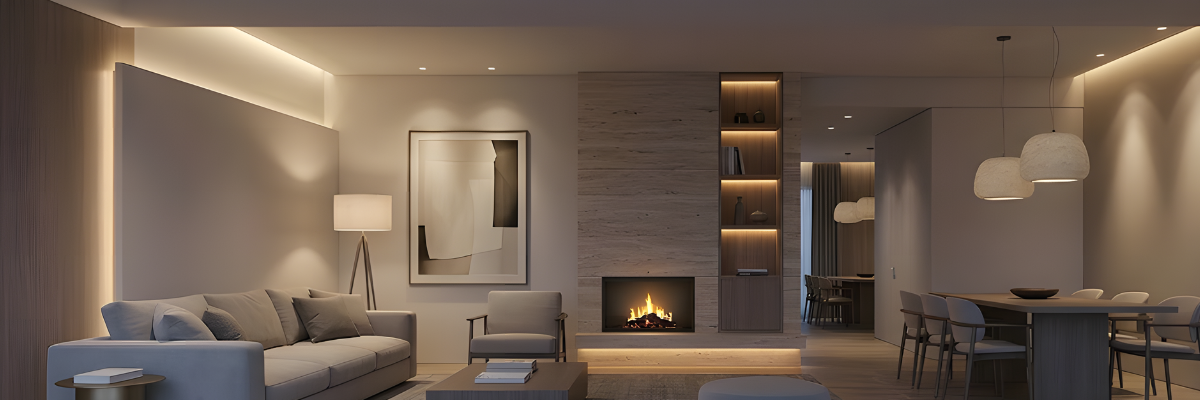
The moment someone steps foot in your living room, lighting silently determines how they feel. Light with intention, rather than just installed for light, can make even the simplest of spaces look expensive. Luxury interiors never really describe their materials as high-end furniture; they speak far more about the revelation of surfaces, textures and spaces with the help of light. A bright and ethically luminescent room is harmonious, peaceful, styled but not cluttered, while with poor lighting it seems to flat even the most expensive decor. A new rage in home design however is not the newest appliance but rather something that has been making homes feel more warm and inviting for ages, lighting. It controls depth, architecture is high when needed to express light and mood rules the day. Once you realize this, then we can surely convert a basic living room into something reminiscent of an expensive apartment without actually remodeling.
What Makes Lighting Look “Luxury”?
It is not about brightness and power but rather control, balance and subtlety. A space feels premium when light is layered, rather than singular. Coziness Of TextureSoft, diffused light instantly makes any room look better as it diminishes harsh shadows. And lastly, the importance of hidden lighting: light sources are not directly visible creating a smooth glow avoiding glare. The use of either warm or neutral tones helps a lot in the upper-class atmosphere. Last but not least, luxury lighting steers clear from jumbled visual chaos — instead embracing simplicity. Lighting, when purposeful, architectural and cozy in the atmosphere allows the space to inherently gravitate towards luxury whilst not needing extensive embellishment.
Layered Lighting Design
Every luxury living room design ideally features layered lighting. Instead of relying on one main-light source, designers are blending many layers to function in conjunction. It adds depth, contrast, and versatility on how the room can be experienced. These form the layers, some of which will brighten an area as a whole; others — pants down details and help with day-to-day life. If these layers interact well, you get a balanced feel to the room and plenty to look at with your eyes. The goal is not to brighten space — but to make it "smart" (in how light is distributed). It leads homeowners to a method to make correct changes according to time, task or occasion creating a unique yet classy character of the living room over the day.
Ambient Lighting

Ambient lighting is the base upon which all living-room-related forms of light build. It creates ambient light that keeps the area feeling airy and comfortable, without stark contrasts. Ambient lighting should feel soft and evenly spread, typically accomplished through ceiling fixtures, recessed lights, or hidden LED systems. The goal is to highlight the brightness of the light, rather than a uniform diffusion throughout the space. If executed properly, it clears away dark corners and acts as a neutral base that will support the other layers of lighting. This foundation provides a calm, orderly, and visually stable space.
Task Lighting
These are designed to help people perform tasks such as reading, working, or relaxing in smaller zones of focus. It targets light exactly where it is needed without unwanted spill throughout the room, unlike general lighting. Examples of these may be table lamps, floor lamps, and the angle adjustability in a wall light. In luxury indoors, job luminous is not settled for on operation, however, designed to appeal. An exquisitely placed lamp can act not only as an object but also as a discrete decorative piece. Task lighting walks that fine line of being practical while still very stylish—making it an essential for a polished living room design.
Accent Lighting

This is where accent lighting starts to become a bit more luxurious in the living room. It is used for accentuating architectural details, artwork, or wall texture that you want to show. Compared to ambient light, it is more focused, more dramatic,, allowing for intrigue and depth. Wall washers, LED strips, PS, and directional spotlights are commonly used to achieve this. It helps to create layers in the room and carry the eye toward important design elements using Accent lighting. It brings contrast without being overwhelming in the space. Used carefully, it elevates basic features to headings and creates a consistent and luxurious visual identity throughout the whole living room.
Shop Living Room Lighting
Choosing the Right Color Temperature for a Premium Feel
The Importance of Color Temperature in Living Room Design? It helps dictate whether the space feels warm and inviting or crisp and contemporary. And for luxury interiors, the natural light temperature is a matter of careful selection rather than random preference. While cooler tones contribute to clarity and structure, warmer tones bring comfort and softness. The trick is consistency and ensuring the light level and tone correspond with the room type and styling. Unintentionally mixing warmth can cause an area to feel disjointed. Proper lighting temperature makes furniture, wall colors, and textures look more cohesive and intentional.
Warm Lighting (2700K–3000K) for Cozy Luxury
Dim lighting represents coziness, tranquility, and sophistication of a room. It generates a pleasant golden light that makes spaces feel warm and intimate. Such lighting is typically used in high-end living rooms, as it warms the textures of wood, fabric, and natural finishing. Warm tones are less sharp and vivid, especially at night. It enriches neutrals as neutral palettes look more beautiful and well-rounded. Done right, warm lighting provides a cool sophistication that characterizes much of the success found in high-end residential interiors.
Neutral Lighting (3500K–4100K) for Modern Balance
Neutral lighting provides a happy medium between warm and cool conditions, which is perfect for modern living rooms. It gets the point across without feeling a bit too clinical or too airy. Such lighting temperature is appropriate for the areas where modern furnish combined with fewer design materials. It helps to provide some added visibility, whilst still being a comfortable environment. Neutral lighting tends to be found within the living areas, which are reoriented toward daytime, where sunlight is used as a supplement rather than a replacement for electrical lighting. It helps ensure accuracy in color-classifying the interiors and prevents items of furniture and decor from appearing inaccurate as compared to commonplace ones. This makes it a great option for elegant but utilitarian luxury spaces.
Use of Indirect Lighting for a High-End Look
What is one of the best options when it comes to decorating a living room experiencing luxury lately: indirect lighting. Instead of being exposed, it reflects off a surface like the ceiling/walls or an architectural recess to allow light to fill a room. This results in an incandescent glow that is warm and pleasing to the eye. Cove lighting, concealed LED strips, and backlit panels are some of the popular techniques used. Letting go of visible fixtures decreases visual clutter and enables light to flow smoothly without obstruction. It also helps broaden rooms and give them a more elegant look, helping to enhance the space depth. That's often used in high-end home design, since it adds sophistication and doesn't highlight the originator of the source.
Statement Lighting Fixtures That Elevate the Room
A statement in a luxury living room always serves as a functional and design element between the lighting fixtures. These items are not just for lighting but functional works of art. Elevators, chandeliers, sculptural pendant lamps, and designer floring lamps are a quick way to alter the character of any room. A carefully chosen fixture serves as a visual focal point around which the room revolves. The secret lies in proportion and position, where the fixture should play support rather than overpower. Less is more when it comes to high end interiors, usually with far larger impactful lighting pieces. In the right setting, statement lighting enhances personality and sophistication, creating a polished environment that speaks to luxury design.
Smart Lighting Systems for Modern Luxury Homes
You know smart lighting systems have been the hallmarks of any luxury home. You have total control over brightness settings, color temperature, and lighting scenes directly from mobile apps or via voice command. This allows for such versatility to change the living room atmosphere at a whim — relax, entertain or get together. They can also be programmed to optimize lighting patterns according to natural daylight, further improving comfort and optimizing energy consumption. Smart systems engineered to limit the necessity for manual control while maximizing comfort and customization. Luxury interiors embody new-age luxury, where technology blends in with design and functionality never gets in the way of aesthetics; rather it adds to the experience.
Lighting Placement Strategy
Lighting Placement for a Living Room You are well aware that the type of lighting holds accuracy in a living room. And even the best fixtures will look ineffective if poorly placed. The light distribution shall not rely on central ceiling lighting, but divides among different zones in a well-designed layout. Corners, walls and edges of ceilings are often go-to ground for balance and adding depth to it. Strategic placement eliminates harsh shadows and deftly highlights architectural features. Drafters also look for glare, making sure the eye level and placement of furniture are suitable to it. When lighting is designed and chosen well, it will create the illusion of bigger rooms, a sense of order and pleasing visual comfort. When placed correctly, lighting is more than a necessity but central to designing.
Common Lighting Mistakes That Make a Room Look Cheap
Lighting is one of the easiest ways to keep a living room from feeling luxurious. One mistake is using a single overhead light source, leading to bland and unwelcoming spaces. Another is combining color temperature indiscriminately without rest plans, which makes them visually inconsistent. Excessively bright white lighting can create a sterile ambiance that feels overly busy and uncomfortable in the interior. Another problem, the shadows are ignored because in order to have balanced lighting, you need contrast and depth. Visible cluttered fixtures can break the clean look of a room. Mistakes are to be avoided if you want a sophisticated look. Good lighting is not aggressive or random; it is subtle, layered, and purposeful.
How to Make a Small Living Room Look Luxurious with Lighting?
Surprising touches such as lighting brighten up small spaces, making them appear almost quite luxurious. Light should not be added with heavy fixtures; instead, darkness can create depth and openness. Mounting fixtures and recessed lighting free up room as they brighten spaces. Mirrors with soft light create a perception of size. The vertical lighting techniques catch our attention vertically, raising ceilings asynchronously. Minimalist fixtures help to eliminate visual clutter and have a clean look. Layered lighting makes certain no one area comes across as too bright or dark. You could make even the most compact of spaces feel elegant, balanced,d and well-thought-out without changing anything in the structure!
Lighting Trends in Modern Homes
Lighting preferences are highly influenced by regional lifestyle, climate & architectural styles. So in homes (especially urban and suburban ones) in South Asia, we now have this trend of warmer LED lighting and modern designs that are very minimal. As usage demands grow, energy efficiency is also emerging as a key consideration. Natural daylight from neighbouring warm climate architecture is usually combined with soft artificial lighting in order to keep the visual thermal comfort zone of a space from becoming overheated. Modern design trends prefer the look of clean lines, hidden lighting, and flexibly planned areas. The opportunity to buy modular lighting systems in their closest markets has simplified the process of adopting luxury-style interiors for homeowners,s and that, too, at an affordable cost without spending too much or going through intricate installations.
FAQ’s
How do I make my living room look expensive with lighting?
Light should actually be used to create depth, balance, and mood,d which is the cornerstone of expensive-looking living rooms rather than just brightness. It is all about layering so the space has a dynamic feel with ambient, task, and accent lighting. Soft warm shades often accentuate comfort and sophistication, while concealed lighting gives it an even, high-end sheen. Do not use only a source of light. Rather, put light in different zones of the room. Subtle textures, walls,s or artwork are great ways to catch the eye. When it's lighting that feels meticulous and low-key, the entire area has an air of higher-end sophistication.
What lighting color looks luxurious?
Warm white Lighting: This is the most luxurious of all choices, as it results in a soft and gracious atmosphere. It highlights real materials in woods, fabric, and tone — so there is a terrific sense of organic depth and balance to interiors. Warm tones do not create a harsh contrast as white light does, and thus reduce glare and provide a soothing visual experience. Or when minimalism calls for a more pure, structured natural hue cast in the shadows in modern design. The key to note is the consistency of tone across the room. But an arbitrary choice of lighting temperatures can create moderately different visuals, taking away the luxury touch, making it visually inconsistent.
Are LED Lights Good for Luxury Interiors
Features of LED lighting: LED lighting is a valuable aspect of luxury interiors, combined with flexibility, performance, and design versatility. It lets the property holders control in a precise style the brightness, color temperature, and placement. Using LED strips is great for making hidden lighting that draws attention to architectural details. In addition, modern LED systems can be integrated with smart controls to generate personalized lighting scenes. Used correctly, LED allows for a clean and modern look without any boxy bulk. It is not the technology per se,although, after all, it can be good or bad depending on how it has been designed and installed, whether the space seems luxurious or ordinary.
What is the light used by interior designers?
A layered lighting technique for a room, which pairs ambient, tasks,k and accent lighting together is the hallmark of an interior designer. It allows for a harmony of balance, utility and aesthetics in a room. They typically use hidden lighting systems, to provide smooth light without visible sources. Character and focus are set with statement fixtures such as chandeliers or sculptural lamps. In addition, designers choose color temperatures carefully according to the use of the room and style. Striking a balance between form and function is an endless pursuit, lighting should accentuate the architecture and not compete with it.
Conclusion
It is not a matter of cost (like the fixture looks too expensive) or brightness (every lamp shines like a star and makes everything look like a hospital) in luxury lighting but design with emotion! A well lit living room is balanced, layered and naturally inviting. The right blend of ambient, task and accent light gives it depth — the colour temperature sets the mood. And these include indirect lighting and integrated smart systems that compound the sophistication. Even small design decisions, such as placement and choice of fixtures can transform the feel of the space completely. Purposeful lighting can elevate casual living rooms to polished, classic settings that appear effortlessly stylish and inviting without the need or expense of renovation.
Share:
How many lumens do I need? Room-by-room calculator & guide
Why Every Modern Home Needs a Statement Chandelier?