
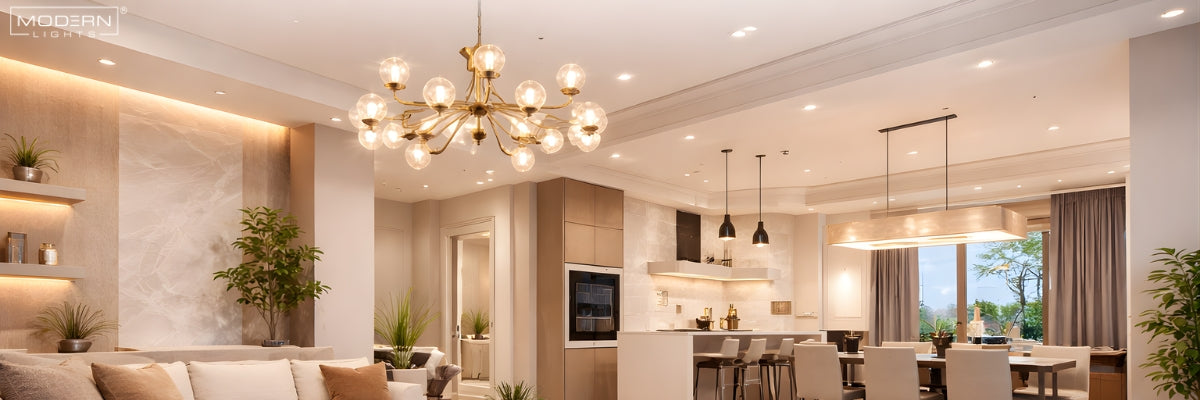
Lighting fixtures are very significant for both the function and the beauty of a room. A modern light fixture like a chandelier, ceiling light, or pendant light can highlight the architecture of a space, improve comfort, and act as a focal point. A room can quickly feel off-balance if the wrong size or type of fixture is chosen.
A chandelier that is too small may not provide enough presence or light, while an oversized fixture can overwhelm the entire room. In modern homes, lighting is not just functional—it’s also a design element that includes everything from interior fixtures to exterior lighting and backlit address numbers that enhance curb appeal.
Why Lighting Planning Is Important in a New Home
Lighting plays a major role in how a home looks and feels. A well-planned lighting layout ensures that every room is properly illuminated and visually balanced. Without planning, spaces can end up with uneven lighting, dark corners, or fixtures that are poorly positioned.
A thoughtful approach allows you to combine different lighting types effectively. Chandeliers, ceiling lights, and pendant lights are commonly used in modern homes because they provide both functionality and style. Planning also helps determine wiring, switch placement, and fixture locations before construction is completed, avoiding costly adjustments later.
Understanding the Three Layers of Lighting
A well-balanced lighting plan uses three main layers, each serving a different purpose in the space.
Ambient Lighting
Ambient lighting is the primary source of illumination in a room. It provides overall brightness that allows you to move comfortably and perform daily activities. This layer typically comes from ceiling lights, chandeliers, or recessed lighting.
To eliminate shadows and maintain balance, ambient lighting should be evenly distributed. In larger spaces, multiple fixtures or larger ceiling lights may be required. Choosing the right ambient lighting ensures the room feels open and welcoming.
Task Lighting
Task lighting provides focused illumination for specific activities such as cooking, reading, or working. It is essential in areas where clarity and visibility are important. Common examples include pendant lights over kitchen islands, table lamps, and bedside lighting. In kitchens, pendant lighting is often used to illuminate countertops and preparation areas. Proper placement prevents shadows and ensures functionality.
Accent Lighting
Accent lighting highlights design elements such as artwork, textures, or architectural features. It adds depth and creates a layered look within a space.
Wall lights, shelf lighting, and decorative fixtures are commonly used for this purpose. Accent lighting is not intended to fully illuminate a room but to enhance its visual appeal and create contrast.
Creating a Lighting Plan Before Construction
Planning lighting before construction begins allows you to fully control placement and wiring. This step is essential for ensuring your lighting layout works with your home’s design.
Start by mapping out each room and identifying where light is needed. Consider furniture placement and how each space will be used. This helps determine the ideal positions for ceiling lights, chandeliers, and switches.
Working with an electrician early also allows you to create lighting zones, giving you flexibility to control different areas independently once the home is complete.
Planning Lighting for the Living Room
If you have a large living room, statement chandeliers or bold ceiling lights can visually anchor the space, making them ideal lights for living room designs. These are often combined with floor lamps and Living room table lamps to create a warm and balanced environment.
Accent lighting such as wall lights, can further highlight architectural features or artwork. This layered approach ensures the space feels both functional and visually cohesive.
Planning Lighting for the Kitchen
Kitchen lighting needs to balance functionality with design. Since kitchens are used for cooking and gathering, multiple lighting layers are essential. Ceiling lights provide general illumination, while pendant lights above islands add focused task lighting. These fixtures help illuminate preparation areas clearly.
Spacing between pendants should generally be between 24 and 30 inches to ensure even coverage. The size and placement of fixtures should align with the dimensions of the island or countertop.
Planning Lighting for Dining Rooms
Most dining rooms rely on a single fixture placed directly above the table, serving as both a light source and a design centerpiece. In modern interiors, linear suspension lights are becoming a popular alternative to traditional chandeliers, especially for rectangular dining tables. These fixtures provide even illumination across the entire surface while maintaining a clean and contemporary appearance.
Dining rooms Chandeliers remain a classic option and should be proportionate to the table size and hung at an appropriate height. Pendant lighting may also be used in more modern settings.
Planning Lighting for Bedrooms
Bedroom lighting should feel calm, balanced, and practical. A central ceiling light is usually combined with table lamps or bedside lighting for added functionality.
In rooms with lower ceilings, flush-mount ceiling lights/ semi-flush mount fixtures are often the best choice, as they provide sufficient light without taking up vertical space. Larger bedrooms may also incorporate chandeliers or pendant lights for a more refined look. Wall sconces are commonly used in reading areas, offering both convenience and a clean, modern appearance.
Planning Lighting for Hallways and Entryways
Hallways and entryways require lighting that provides both visibility and style. Ceiling lights or recessed lighting are commonly used to maintain consistent brightness throughout these areas. Entryways often feature decorative pendant lights or compact chandeliers to create a strong first impression. Wall lights can also be used to add depth and enhance the visual appeal of corridors.
Outdoor Lighting for New Homes
Outdoor lights are important for safety and the way your home looks from the street. It makes the house look better at night and lights up pathways, doorways, and outside areas.
Porch lights, walkway lights, and garage lights are all types of outdoor illumination. Many modern homes also have backlit address numbers, which make them easier to see and give the outside a clean, modern aspect. If you organise your outside lighting effectively, your home will still look good and work well after dark.
Infographics

Common Lighting Planning Mistakes to Avoid
Many homeowners focus on style without considering function or placement. This often leads to lighting that feels unbalanced or insufficient. Installing too few fixtures can leave areas poorly lit, while choosing fixtures that are too small can make them appear out of place. Poor placement of chandeliers or pendant lights can also affect the overall balance of a room.
Ignoring task lighting in key areas such as kitchens or workspaces can reduce usability. Proper planning helps avoid these issues and ensures a more effective lighting design.
Choosing the Right Lighting Fixtures for Your Home
Choosing the right fixtures is just as important as planning their placement. The size, style, and type of lighting should match the room’s dimensions and overall design.
Modern homes often use statement lighting fixtures such as chandeliers, pendant lights, and ceiling lights to create a cohesive look. Floor lamps and wall lighting can also enhance layering and functionality. Selecting fixtures that align with your space ensures both visual harmony and practical use.
FAQ’s
When should lighting be planned in a new house?
Lighting should be planned during the early stages of construction. This allows proper placement of wiring, switches, and fixtures before walls and ceilings are finished.
How many lights should a room have?
The number of lights depends on the size and function of the room. Most spaces benefit from a combination of ambient, task, and accent lighting.
What type of lighting is best for modern homes?
Modern homes often use a mix of chandeliers, pendant lights, and ceiling fixtures to create both functional and decorative lighting.
How do you layer lighting in a room?
Layering lighting involves combining ambient, task, and accent lighting to create a balanced and functional environment.
Conclusion
Choosing the right size fixture ensures that lighting becomes an essential part of your home’s design. From modern chandeliers and pendant lights to ceiling lights, floor lamps, and wall lighting, each fixture plays a role in creating a balanced and functional space. For exterior spaces, integrating backlit address numbers and outdoor lighting enhances both visibility and modern curb appeal, making your home stand out day and night.
Share:
2700K vs 6000K Backlit Address Numbers : Which is Better?
Lighting Mistakes Homeowners Should Avoid